Self-host for free
If you are technical, run the open-source version yourself without paying for hosted infrastructure.
Open source, inspectable, and yours to run.
Job search pipeline
One keyword on one job board is easy. It is also too narrow.
A serious job search is different. You are searching multiple terms, checking multiple sources, saving roles, tailoring CVs, tracking applications, remembering follow-ups, and trying not to lose useful job descriptions before interviews.
That is not a motivation problem. That is a system problem. JobOps turns your job search into a pipeline.
The multiplication problem
The jump from one saved search to a real search pipeline is where browser tabs stop helping.
8 search terms x 8 sources = 64 searches
Suddenly, you are not doing one search.
You are managing dozens of searches, hundreds of results, duplicates, stale job posts, CV versions, recruiter notes, and follow-ups. This is where tabs break.
One place to live
Collect the messy parts of a serious job search into one place: roles, fit, resume context, application status, notes, follow-ups, and job details.
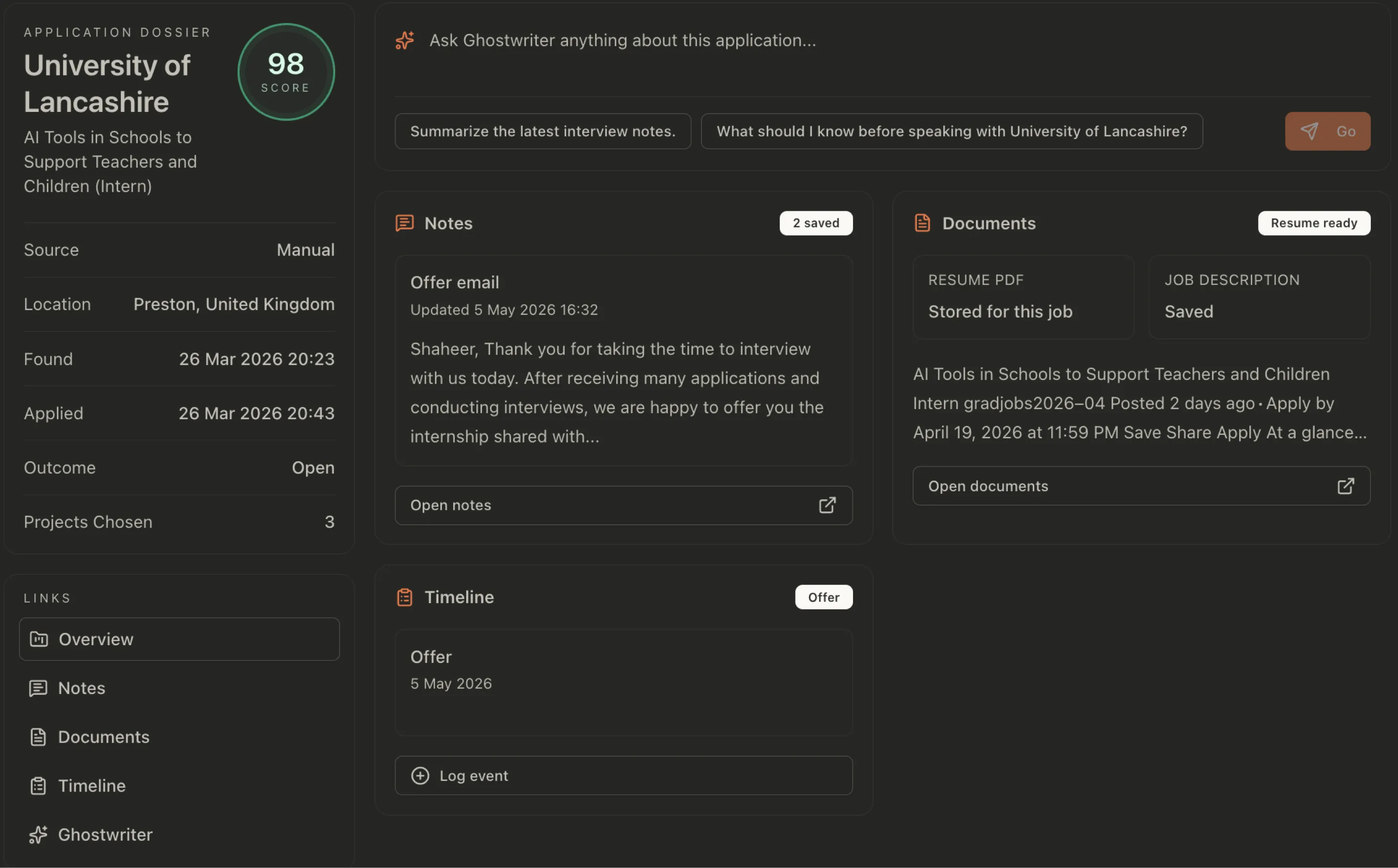
Not an auto-apply bot
JobOps is for people who want to search wider and move faster without turning their job hunt into spam.
You decide what to pursue, what to ignore, how to tailor your application, and when to apply.
Use computers for the repetitive parts. Keep the human in charge of the important parts.
The hidden work
The hard part is not only finding jobs. The hard part is keeping track of everything after you find them.
Which CV did you use?
Did the job description change?
Did the post disappear?
Did you already apply to this company?
Was this one worth following up on?
What did the recruiter say?
What stage is this application in?
A spreadsheet can track rows. JobOps tracks the workflow.
Free or hosted
Job seekers are often short on cash. That is why JobOps is open source.
If you are technical, run the open-source version yourself without paying for hosted infrastructure.
Open source, inspectable, and yours to run.
If you want the setup handled, use the hosted version without running the infrastructure yourself.
£20/month if you bring your own AI keys. £30/month with AI included.
Who it is for
It is not for people who want a magic button that applies to hundreds of jobs without thinking. That is not the point.
Example workflow
Repeat the loop without losing context.
01
Start with multiple search terms, not just one.
02
Collect roles from different sources.
03
Save the roles worth reviewing.
04
Assess fit against your profile.
05
Tailor your resume for the specific role.
06
Track the application status.
07
Keep notes and follow-ups in the same place.
08
Repeat without losing context.
Frequently asked questions
No. JobOps does not apply to jobs for you. It helps you search, organise, assess, tailor, and track while you stay in control.
Yes. JobOps is open source, so technical users can self-host it for free.
JobOps Cloud is the hosted version for people who want JobOps without managing servers, deployments, and setup.
A spreadsheet can track application rows, but it does not handle the full job search workflow well. Job descriptions disappear, CV versions get messy, follow-ups get forgotten, and context gets scattered. JobOps is built around the workflow, not just the table.
JobOps is built for serious job hunters who want to search wider, stay organised, and keep control of their applications without relying on browser tabs and memory.
Give your job search a system
Give your job search one place to live.